

Some images are illustrative only. We do not share children’s creative work in order to respect their confidentiality and privacy.
- Video games: threats or opportunities?
- Wonderworld Quest
- Safety and confidentiality
- Wonderworld: where did we go?
- Online + offline: how does it work?
- Psychoeducation: Place of Power and “What do you feel right now?”
- How to save the world?
- Some outcomes and future perspectives
- Once again about online + offline: why does it matter?
- The challenges of adaptation
- From screens to streets, lakes, and forests
- Challenging a sedentary lifestyle
- Countering russian propagandists
- Want to run a quest like this?
Video games: threats or opportunities?
Play and friendship are natural needs of a child. But because of the russian war, for millions of Ukrainian children, digital games may become the only (or almost the only) place to play and meet friends. This especially concerns children who, against their will, have ended up in unfamiliar places or countries.
On one hand, there are many risks. But not because games and gadgets are bad by themselves. The problem is that vulnerable and lonely Ukrainian children are being targeted by predators and scammers, as well as russian propagandists and recruiters on the Internet. (There are also risks of cyberbullying, harmful content, and more.)
On the other hand, video games and gadgets are not going anywhere – and neither are the needs for play and connection. That’s why parents, guardians, psychologists, social workers, and educators need to understand video games. To see what in those virtual worlds may actually threaten a child, and what may instead be a response to difficult circumstances, traumatic experience, or age-specific challenges.
One of the goals of HealGame Ukraine is to create projects where video games are used for emotional support of children. These projects also aim to help adults better understand the world of modern children and their behavior in video games during the war.

Wonderworld Quest
In March–April 2025, thanks to the charitable organization Malteser Werke gemeinnützige GmbH and the Team Mentale Gesundheit, together with Ukrainian child psychologist Anna Shulha and with technical support from Donetsk National Technical University, we conducted the Wonderworld quest, developed by me, combining Minecraft with offline adventures.
This was a game for Ukrainian refugee teenagers aged 11–13 who live with their families in different Malteser shelters in Germany.
The quest consisted of four Minecraft Education sessions, each lasting one hour, held twice a week, with offline tasks in between the sessions.
The goal was to improve the emotional state of the teenagers, create opportunities for friendship, and meet the need for spontaneity and play.
Safety and confidentiality
For the game, we used Minecraft Education — a version of the game developed for schools, with a focus on safety.
Each child was given a separate room to play in.
The laptops were used only for the quest.
During the game, we communicated with the children via text and voice using Discord, with cameras turned off.
The Minecraft Education and Discord accounts were created specifically for the quest and used only during the sessions.
A trusted adult in the shelter helped the children connect and provided the offline tasks.
Children’s personal data was not disclosed.
Wonderworld: where did we go?
Wonderworld is a magical world that suffers from the Forces of Evil. It needs the help of children, and at the same time helps them discover their own strength. It also connects online and offline — in a magical way!
A week before the first game, each child received a personal paper invitation and was asked whether they wanted to accept the group contract (a set of rules about the relationship between players, facilitators, and Wonderworld during the quest).
If the child agreed, they were given envelopes with secret Wonderworld files (the invitation and a questionnaire). In the questionnaire, the child could invent a name, choose a favorite color, and select one of the locations in Minecraft.
The main principle was respect for the child, their freedom of choice, and the information they were willing to share with us.
So we clearly explained who would see the data they provided, how it would be used, and where it would be stored.

Online + offline: how does it work?
Between each session, there is a bridge that needs to be built between the online and offline worlds.
For example, in the first session, the children find themselves in different corners of Wonderworld. At first, they build their own Safe Places*: fortresses, castles, huts, or shelters. What a child builds — how, where, and what exactly — can already tell us something meaningful about them.
*The term “Safe Place” would not be appropriate to use with children who are currently in Ukraine, because due to the russian war, there are no truly safe places there.

But the players don’t yet know how to find each other in the game world (coordinates are disabled during the first session).
Between the first and second sessions, in the shelters, the children solve a paper crossword — about Ukraine and Minecraft.
It contains a cipher that turns into coordinates within the game world.

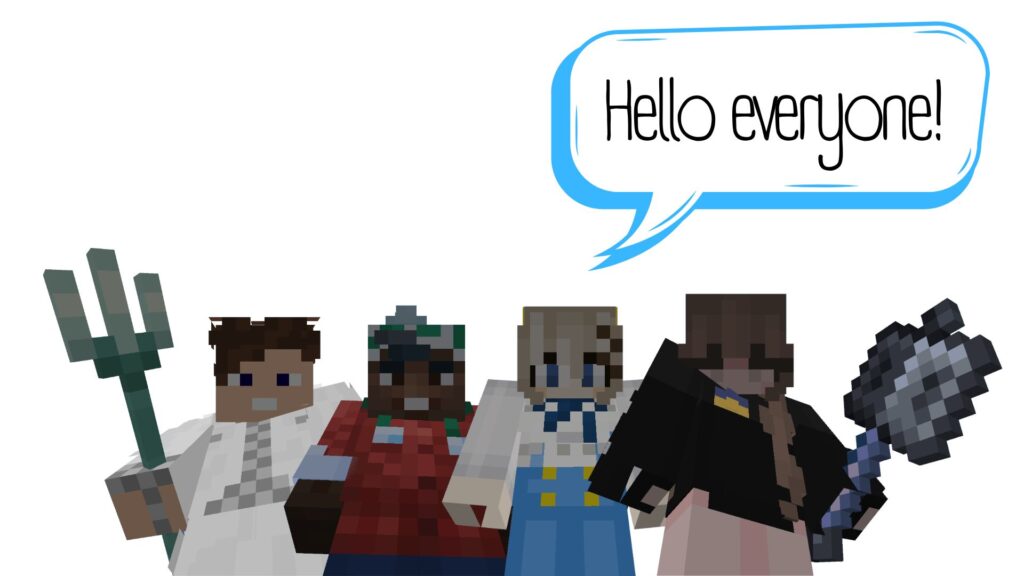
Then, in the second session — already in Minecraft — the children follow the coordinates and finally meet each other!
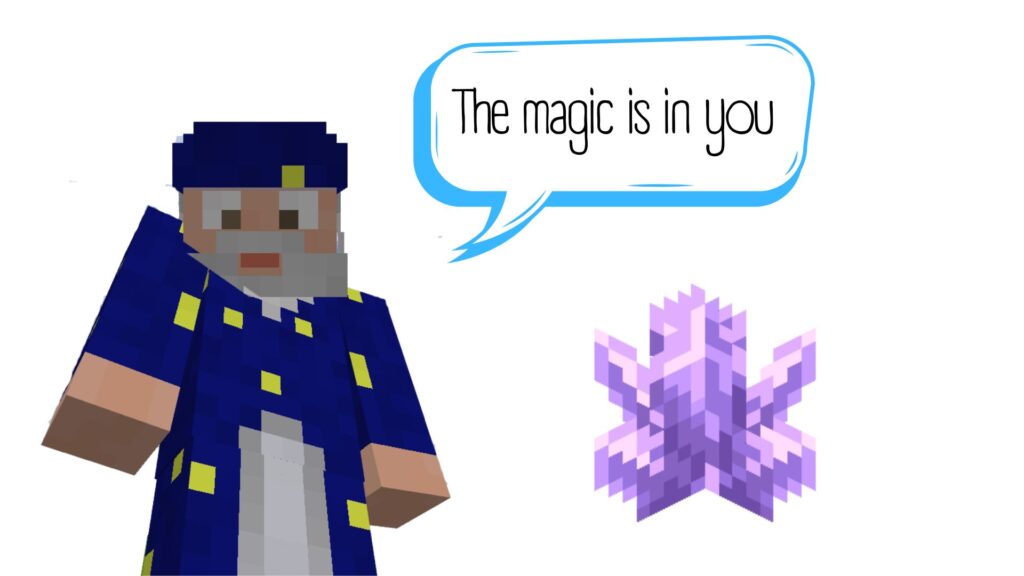
The wizard Eldarion knights them as defenders of Wonderworld and gives them, of course, an important mission — one that leads to new adventures both in Minecraft and on paper (or even outdoors).
For example, in the third session there is a Minecraft maze and a paper map, both divided into four parts.
If each child has only one part, then at some point they become an essential guide for the others.
And the search for this map can be turned into an additional adventure in the physical world.

Mining and crafting in the game are an ocean of inspiration for street quests.
In the game, children first mining materials — wood, stone, minerals, plants, food — all kinds of things!
And then — just like in real life — they can crafting something new by combining a few of those items together.
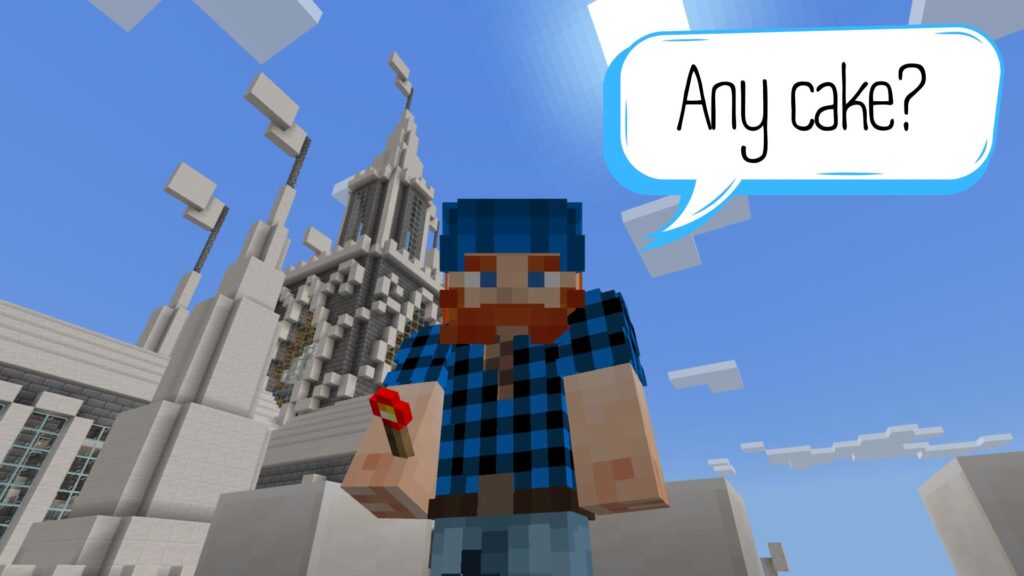
For example, the children want to make a cake (yes, there’s cake in Minecraft too!).
To do this, they need to find and collect in the game: 3 buckets of milk, 2 units of sugar, 1 egg, and 3 units of wheat.

If you create paper cards with these in-game items, put them into Minecraft-style envelopes, and hide the envelopes indoors and outdoors — you can set up a good old-fashioned treasure hunt!

Then, during the game session, the children open their paper envelopes and say what they have found.
The wise wizard gives them these items in the game so they can craft a cake.
Since one of the inhabitants of Wonderworld loves sweets, the appearance of the cake inspires him to show the children the right path.
And that, in turn, helps save the world.
There are countless items like that — and endless ways to use them!
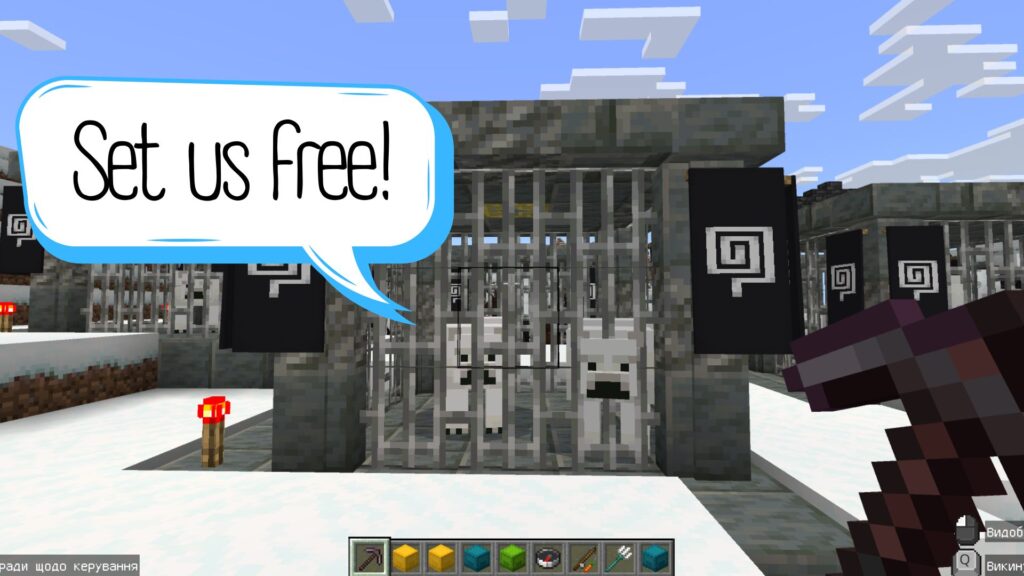
For example, a netherite pickaxe is needed to break iron bars (to free prisoners or get to a treasure),
and a fishing rod can be used to fish — and maybe pull something out of the water that’s needed for another part of the quest.
Psychoeducation: Place of Power and “What do you feel right now?”
Each child had their own Place of Power in the game.
There were 9 pillars there, each with a game item placed on top. These were objects that could be associated with something good or beautiful (like a sapling or a flower), magical (like a crystal), or rare (like valuable ores that take time and effort to find and mine in the game).
At the end of each session, we returned to that Place of Power and invited the children to recall any positive emotions or feelings they had experienced during the game.
Then, they could choose one of the game items that could symbolize those feelings — and place it into the Chest of Power.

“Each of these blocks is special — because your emotions and feelings are special too.
Some feelings are easy to notice, like a tree or a flower.
And some are hidden deep, like certain blocks in Minecraft that you can only find in the deepest mines.
But all of them matter.”

The children could also draw such an item on a paper version of the Chest of Power and take that Chest with them.

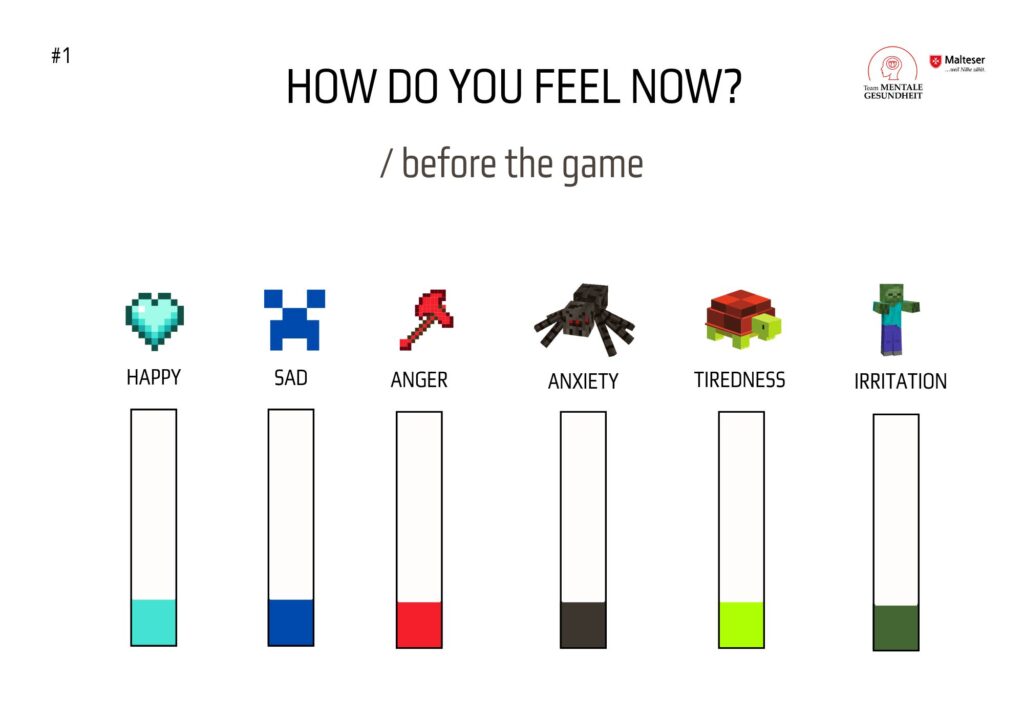
Before and after each game session, we also invited the children to pay attention to what they were feeling and mark it in a self-report sheet designed in the Minecraft style.
How to save the world?
In Wonderworld, heroes must stand up for each other — not fight among themselves.
Otherwise, the world cannot be saved.
So we directed normal teenage aggression toward the Forces of Evil that are trying to conquer Wonderworld.
In the final stage, during the fourth session, the children had to work together to find and rescue the Heart of the World, which the Forces of Evil had surrounded with a black wall on the Secret Island.
Of course, there were obstacles and discoveries along the way.
Treasure hunting using a map from a sunken ship.

Journeys through the Forest of a Thousand Cats, the Cursed Forest, and other mysterious woods.

Freeing the living creatures of Wonderworld.
The children were excited to break open cages and set pandas, wolves, and camels free (Minecraft is a very populated place!).
Adventures in the Enchanted Village.

And finally, the island with the Heart of the World.
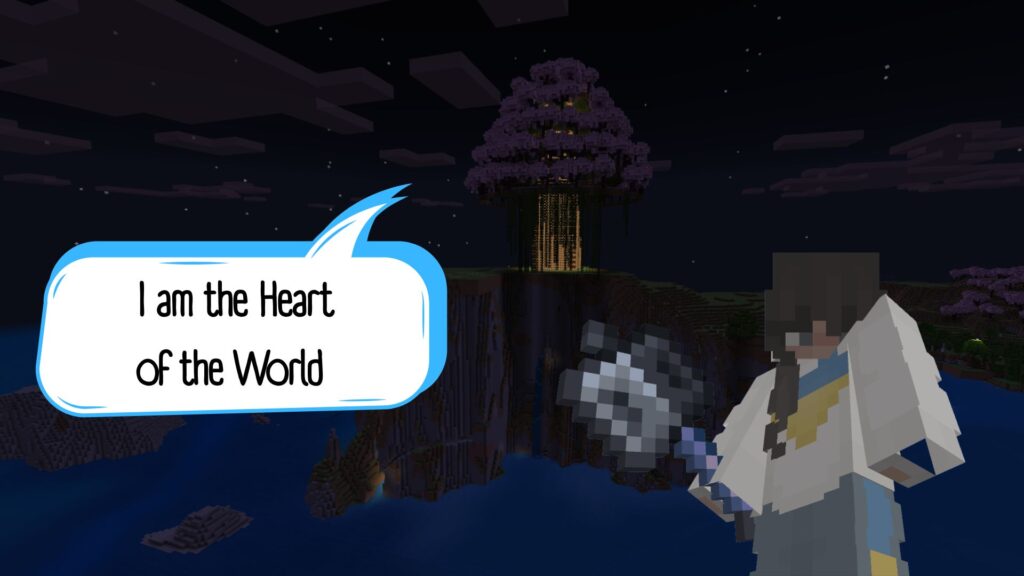
As soon as the children placed the Chests of Power filled with good feelings in the right spots beneath the Tree, the black wall fell — and all the evil vanished.
And Wonderworld brought something from the digital world into the physical one: real gifts.
We had asked the adult helpers to hide Minecraft-themed mugs in the game rooms ahead of time, so the children eagerly searched for them!

Some outcomes and future perspectives
Based on the children’s self-reports, internal feedback from shelter staff, and a survey of parents, the responses were overwhelmingly positive.
I can’t share everything due to confidentiality, but both parents and staff noted that the children seemed more open and confident after the game sessions.
It’s incredibly interesting to observe what and how children build, how they navigate the game, how they react when someone gets lost or needs help.
As child psychologist and quest co-facilitator Anna Shulha says:
“The way a child plays is the way they live.”
But the most valuable part was hearing the children’s genuine emotions — especially when the gifts moved from the virtual world into the real one!
Malteser Werke gemeinnützige GmbH and the Team Mentale Gesundheit have now decided to continue and expand the project.
As part of HealGame Ukraine, I also plan to run similar quests for Ukrainian children both in Ukraine and abroad.
The quest can be adapted for children of different ages, and the elements and tasks can be adjusted to fit the conditions and circumstances.
If the weather is bad, we can focus on indoor challenges. If it’s warm outside — we go treasure hunting in the streets!
Safes, ciphers, letters and postcards, drawings, elements of board games — all of it can become part of the game.
And the setting can change too — instead of a magical land, it could be another planet or a different historical period.
One of my important goals is to adapt this quest for children with physical disabilities and special educational needs.
Once again about online + offline: why does it matter?
The challenges of adaptation
For children who find themselves in unfamiliar environments, it’s completely natural to seek refuge in worlds where they feel confident — in their favorite online games.
At the same time, for teenagers, the experience of forced relocation or emigration because of war can be especially painful.
Adolescence is a time of separation, bold exploration of the world, and forming one’s own decisions.
But suddenly, the world becomes dangerous and foreign, and the teen’s decisions once again seem to carry no weight.
That’s why building such bridges between video games and offline life can make the outer world feel less hostile — and worth exploring and engaging with.
From screens to streets, lakes, and forests
Combining video games and the offline world opens new ground in emotional support for children.
And it is exactly because we respect a child’s interest in video games that we are able to help them discover something meaningful beyond the screen.
In the wonderful book Video Games in Psychotherapy by Robert Rice (Routledge, 2023), the author explores how video games and the outside world can be integrated into therapy.
In Dr. Rice’s method, the work between the child and therapist on a problem is structured like a video game, unfolding at the level of a “Room” or a “School.”
One story in the book tells about a boy who spent a lot of time in front of a screen and said he “hated fresh air.”
When Dr. Rice started working with him, he unexpectedly discovered that the boy loved a fishing game — because he was actually interested in fishing.
He just didn’t know how to approach it.
So Rice slowly “guided” him from the screen to a real lake.
As a result, the boy eventually became a state champion in sport fishing!
He still plays video games — but not all day.
(Rice, 2023, pp. 143–144)
Another inspiring example is the work of Rachel Conlisk (UK), a specialist in inclusive play.
In her MineMania project for children with special educational needs, participants first play and get to know each other on a Minecraft server.
Then, Rachel organizes live meetups — and for some of the children, this becomes their first real experience of friendship.

Challenging a sedentary lifestyle
Among all the potential risks linked to excessive video game use, I believe the most real and immediate one is a sedentary lifestyle.
For me, this kind of project is a first step in understanding how to combine video games with physical activity.
Let’s remember Pokémon GO, where players hunted Pokémon on the streets thanks to augmented reality.
Back then, the media wrote: “Sensational: gamers are outside!”
Another great example is the game Geocaching.
Unfortunately, the Covid-19 pandemic slowed down the development of this direction.
But I believe we don’t have to wait for a new Pokémon GO.
Even now, we can take a popular video game like Minecraft (or another one), add a little imagination — and children in 2025 will gladly go treasure hunting outside!
As long as we offer it to them, instead of waiting for a child to put the phone down on their own.
Countering russian propagandists
Video games are yet another battlefield for the souls of Ukrainian children.
That’s why the use of the Ukrainian language in the project is so important.
The meanings we embed in the paper crosswords and puzzles truly matter.
The worlds and stories we invite children into — they matter too.
Want to run a quest like this?
If you’re interested in organizing a similar quest for Ukrainian children in your community or on behalf of a nonprofit organization, please write to: healgameukraine @healgameukraine.click.com